

Trees that could fall into a power line
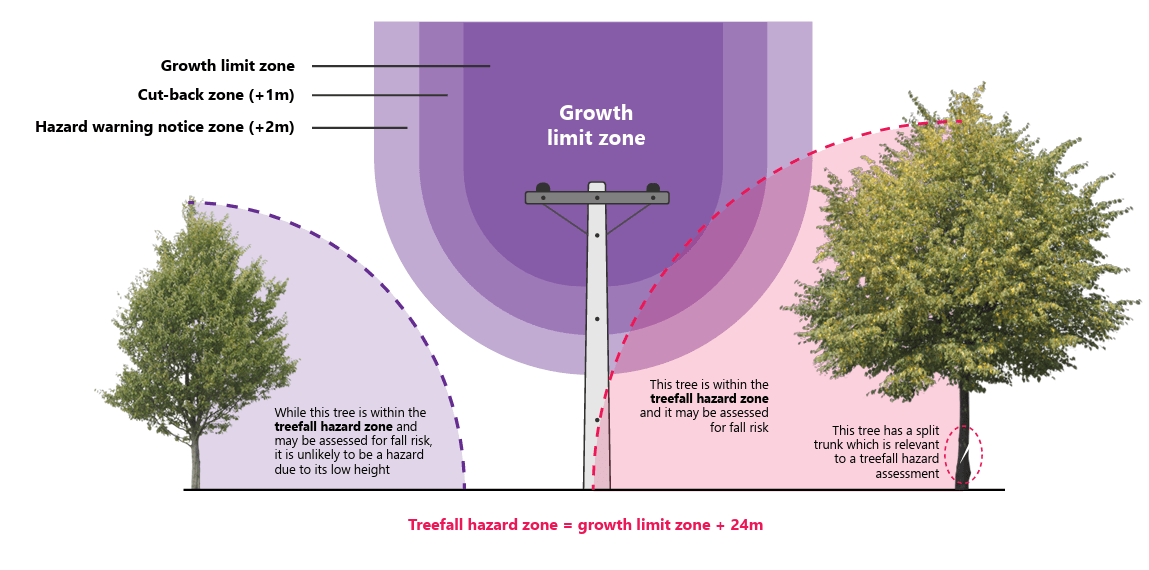
The treefall hazard zone is an area that extends 24 metres from the growth limit zone. Trees within this zone may be assessed by a lines company. This does not mean every tree in the zone is a hazard. It means the tree may be assessed if there is concern that, because of its condition, size or location, it could fall onto the power line. A formal treefall hazard notice can only be issued if the tree is assessed as a moderate or high hazard.
Treefall hazard notices will not be issued before 23 July 2028. Before then, we may use voluntary processes to discuss hazardous trees with tree owners. These voluntary processes are separate from the formal treefall hazard notice power in the regulations.
From 23 July 2028, a tree owner may commit an offence if, without reasonable excuse, they:
-
Do not have a tree removed within the timeframe required by a treefall hazard notice
-
Do not tell us the time and location of the removal as required
-
If convicted, the tree owner may be fined up to $10,000
Planting a new tree near a power line
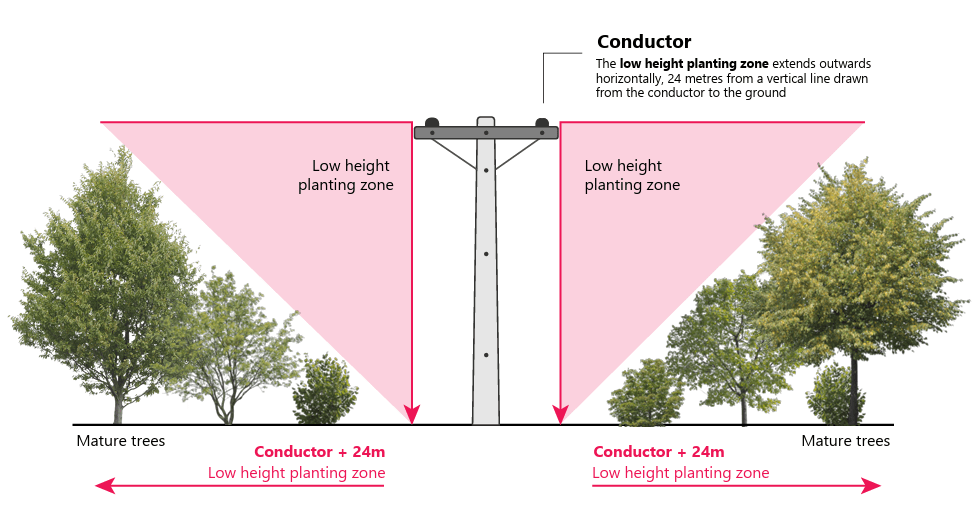
On 23 July 2027, a low height planting rule comes into effect. This means you must not plant a tree if you reasonably expect it could grow taller than its distance from the power line. The low height planting zone extends 24 metres horizontally from the power line.
If you plant a tree in breach of this rule:
- You may be liable for damages
- You may be responsible for the cost if the tree later needs to be cut, trimmed or removed
- You cannot use a ‘no-interest’ tree notice to transfer responsibility for managing the tree to us
The planting restriction does not apply to trees that grow naturally. However, if a self-sown tree within the low height planting zone later needs to be cut, trimmed or removed, the tree owner may be responsible for the cost. There are some exceptions. The low height planting zone does not apply:
- On existing forest land
- In urban areas
- To shelterbelts
- On land administered under the Conservation Act 1987
Low height planting zone
Not complying with the low height planting zone restrictions is not itself an offence. However, it may affect who is responsible for the cost of future tree trimming or removal and the options available to the tree owner under the regulations.
Not sure whether your property is in an urban area? Check your district plan or contact your local council.
Tree notices and what they mean
| Notice / process | When it may be used | What it means | What the tree owner may need to do | Who pays? |
|---|---|---|---|---|
| Treefall hazard notice (from 23 July 2028) Before this date, discussions with tree owners about hazardous trees will be voluntary |
After written advice from a qualified and experienced arborist about the likelihood of the tree falling, a tree in the treefall hazard area has been assessed as a moderate or high hazard. | The tree must be removed within the timeframe set by the regulations. | Work with the lines company on safe removal as per the notice. A moderate hazard tree must be removed within 45 working days. A high hazard tree must be removed within 25 working days. | In most cases, the lines company meets the reasonable cost of removing the tree and associated debris. However, there are exceptions. For example, if a tree was planted unlawfully in the low height planting zone, the tree owner may be responsible for the cost. |
| No-interest tree notice | In certain situations, an owner or occupier may say they have no interest in the tree. If you have already received a cut or trim notice or, from 23 July 2028, a treefall hazard notice, the no-interest notice must generally be given within 10 working days. | This may affect who carries out the work and who manages the tree next. | Follow the process and timeframes in the regulations and any local guidance. |
FAQs
The treefall hazard zone is an assessment area extending 24 metres from the edge of the growth limit zone. A tree within this area may be assessed if there is concern that it could fall onto a power line. Being inside the zone does not automatically mean a tree is hazardous or must be removed.
The lines company carries out the assessment using the factors set out in the regulations. It must take written advice from a suitably qualified and experienced arborist about the likelihood of the tree falling. Forestry advice may also be taken where it is relevant.
The notice will explain the assessment and the action required. A tree assessed as a high hazard must generally be removed within 25 working days. A tree assessed as a moderate hazard must generally be removed within 45 working days. The tree owner must also tell us when and where the removal will take place, as required by the notice.
We will generally meet the reasonable cost of removing the tree and associated debris. Exceptions apply. For example, the tree owner may be responsible if the tree was planted in breach of the low height planting rules. We may also no longer be required to meet the cost if the tree owner refuses consent for the lines company to enter the property and remove the tree.
The low height planting zone is an area extending 24 metres horizontally from a power line on unforested land outside an urban area. From 23 July 2027, a person must not plant a tree in this zone if they have reasonable grounds to believe its mature height will be greater than its distance from the line. The rule does not apply to existing forest land, urban areas, shelterbelts, or land administered under the Conservation Act 1987.
The planting restriction does not apply retrospectively to trees that were already established before 23 July 2027, or to trees that grow naturally. However, these trees can still be covered by other rules about vegetation near power lines. Different rules about who pays for trimming or removal can also apply to self-sown trees within the low height planting zone.
The regulations use the zoning in the relevant district plan or proposed district plan. The definition may not match the way an area is described in everyday language. If you're unsure whether your property is in an urban area, check your district plan or contact your local council.
A shelterbelt is one or more rows of trees planted to protect farming or horticultural land - including animals or crops - from the weather. A row of trees along a boundary is not automatically a shelterbelt; its purpose is what matters.