

Building near power lines
Roofing, scaffolding and building
Whether you’re a property developer, surveyor, builder, scaffolder, roofer – or even just putting up a fence, sign, a marquee or laying a driveway – it’s important to know the rules around building near power lines.
From design through to construction, you must follow the minimum safe distances from power lines set out in the NZ Electrical Code of Practice NZECP34 – Electrical Safe Distances.
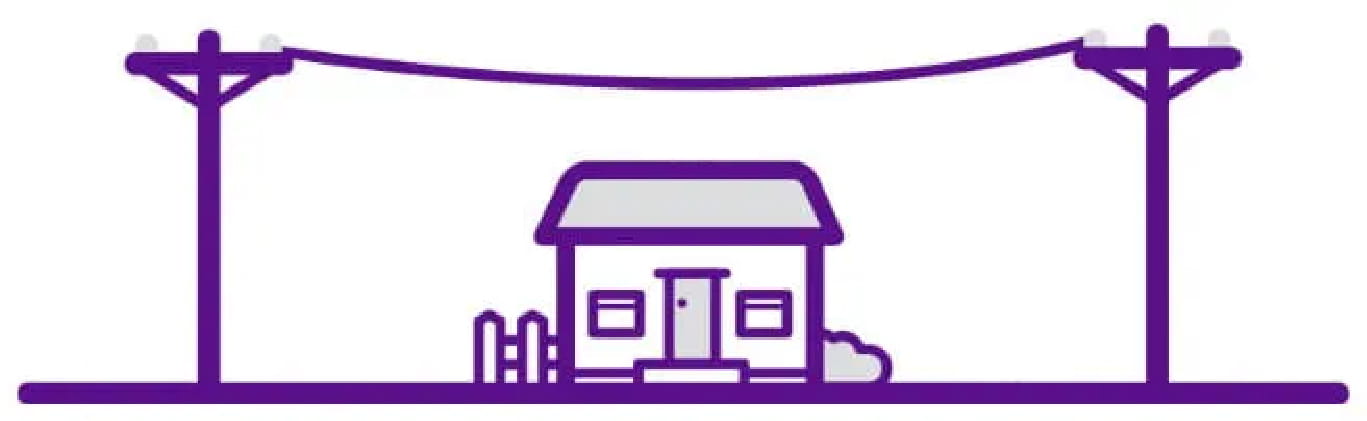
Minimum distance between power lines
| Voltage | Minimum distance beneath power lines | Minimum distance to side of power poles and lines |
|---|---|---|
| Not exceeding 1kV | 4m | 3.5m |
| Exceeding 1kV but not exceeding 11kV | 5.5m | 5m |
| Exceeding 11kV but not exceeding 33kV | 7m | 8.5m |
| Exceeding 33kV but not exceeding 110kV | 7.5m | 9.5m |
| Exceeding 110kV | Refer to table 2 NZECP 34 | |
Close approach and works agreements
The 4 metre rule for overhead power lines
Stay at least 4m away from overhead power lines. If you need to get closer, you must obtain a close approach consent.
The 2 metre rule for underground cables and pipelines
You must hand dig within 2m of cables or pipes – do not use mechanical excavation methods unless you have a standover.
Close approach consents and works agreements
Close approach consents are required for all works on the ground within 5m of a power pole, depending on the depth of the excavation. This ensures your work does not cause a pole to collapse. Consents are valid only for the location, type of work, and dates applied for.
There may be specific requirements for backfill for high voltage cables.


Follow the code
Not knowing what’s a safe distance can come at a price. Help avoid electrocution or serious injury – and costs of putting it right - by following NZ Electrical Code of Practice NZECP34 – Electrical Safe Distances. You can access a copy of the code here. See above for a table of minimum distances.
Before you start work
Check the surrounding under or near power lines, poles, wires or other electricity network equipment.
Contact
0800 Powerco 0800 769 372 if your work is in our network area and we’ll help you with your plans. If your work is outside our area, it’s best to contact your local electricity lines company. See a map of New Zealand lines companies.
What NZECP34 – Electrical Safe Distances covers
The code covers all types of building and excavation – permanent or temporary – near power poles and lines, including but not exclusive to:
- Houses/buildings
- Portable buildings and marquees
- Using scaffolding
- Building fences
- Digging/laying a driveway
- Raising ground levels
- Erecting signs
- Artificial shelter belts and canopies
All work must be a safe distance away from overhead lines.
The minimum distance between a structure and an overhead line varies depending on the voltage the line is carrying.
The structure needs to be clear of lines both underneath and to the side.
FAQs
NZECP34 is the New Zealand Electrical Code of Practice for Electrical Safe Distances. It sets out the minimum safety distances required between electricity network equipment and structures or activities taking place nearby.
The code is designed to help keep people safe and reduce the risk of electric shock, injury or damage.
Minimum safe distances depend on the voltage carried by the power line and the type of structure or activity involved.
Requirements apply to both permanent and temporary structures, including buildings, scaffolding, marquees, fences and driveways. Because every site is different, it’s important to check the specific requirements before starting work.
Responsibility sits with those planning and carrying out the work or build, which can include developers, designers, property owners, surveyors, scaffolders, builders and contractors. Everyone involved should ensure electrical safe distance requirements are understood and followed.
Plan ahead. Before carrying out work near overhead power lines, poles, wires or other electricity network equipment:
-
Check the safe distance requirements under NZECP34
-
Consider electrical assets early in site planning and design
-
Make sure contractors and workers understand the risks and site requirements
Breaching safe distances can create serious safety risks and may lead to work stopping or changes being required before a project can continue. In some cases, structures may need to be altered or relocated to meet safety requirements.
Yes. Safe distance requirements apply to both permanent and temporary structure and activities, including:
-
Houses/buildings
-
Portable buildings and marquees
-
Scaffolding
-
Fencing
-
Digging/laying a driveway
-
Raising ground levels
-
Erecting signs
-
Artificial shelter belts and canopies
All work must be a safe distance away from overhead lines.